
Defence in focus: A sector in transition


National defence is more than just a matter of security - it’s a reflection of a country’s priorities and its strategic foresight.
For India, bordered by two nuclear-armed neighbours and situated in a geopolitically dynamic region, maintaining a robust military posture has always been a national imperative.
Over the decades, this commitment has translated into India building one of the most formidable militaries in the world, ranking as the 4th strongest military in 2025.
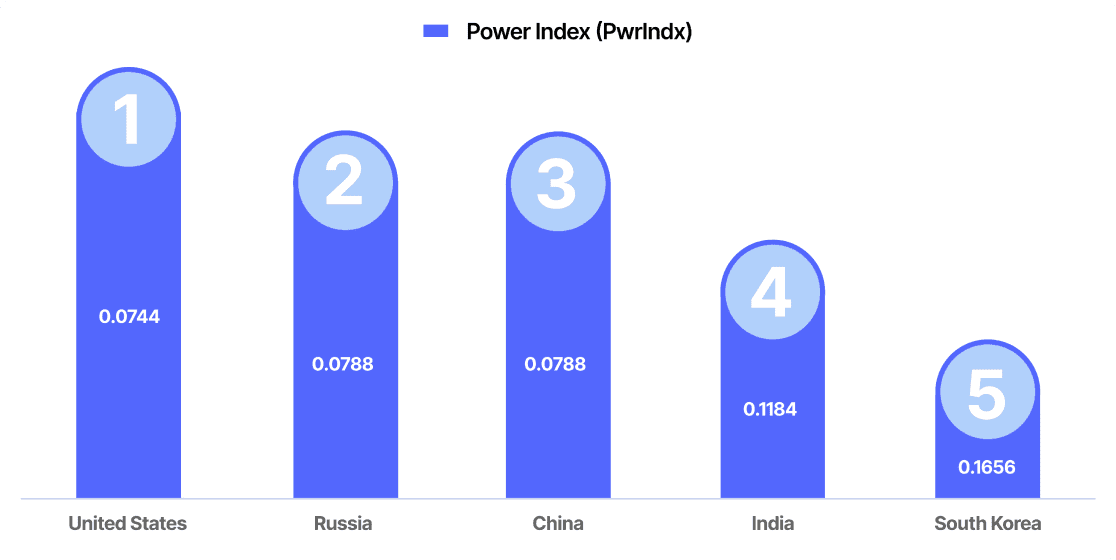
Source: Global Fire Power, May 07, 2025
The cost of strength
Maintaining one of the world’s strongest militaries also comes with significant financial requirements.
India ranks among the top global defence spenders, with India allocating over ₹6.81 lakh crore to defence in the Union Budget 2025–26, and the number has only been increasing historically.
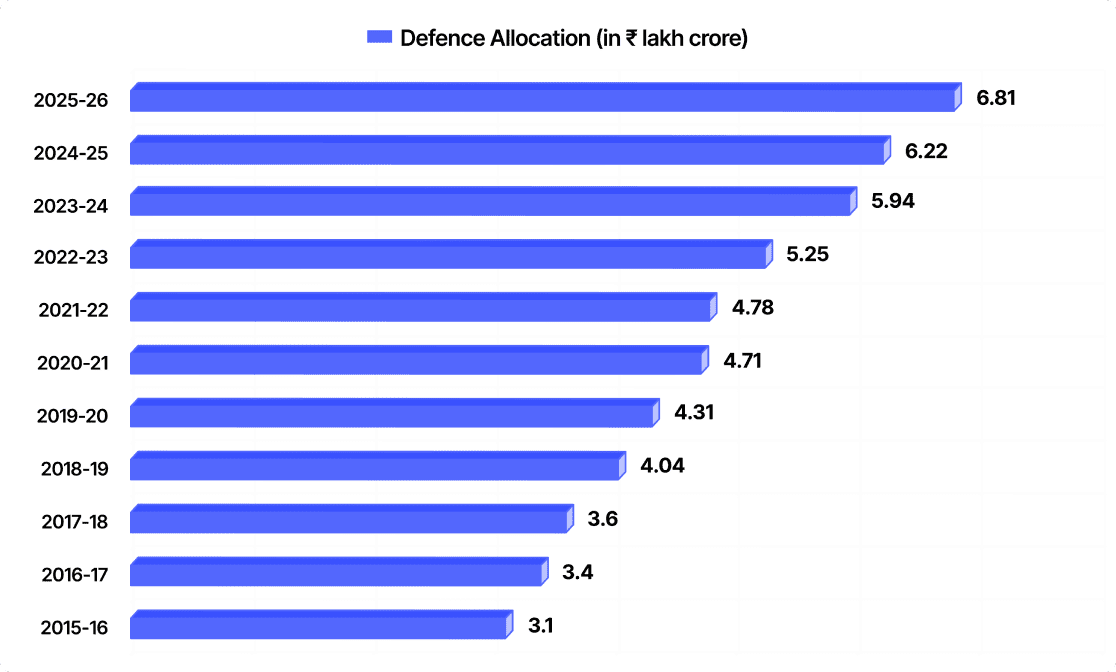
Source: PIB, Feb 01, 2025 | Union Budget Documents, as of 2024-25
Also, while the expenditure on defence has been high, India has historically remained dependent on imports to meet a lot of its defence needs, being the second largest arms importer in the world between 2020 and 2024, only behind Ukraine which has been at the top of the list due to exceptional circumstances.
This external reliance not only has cost implications but also poses long-term strategic risks, especially in times of geopolitical flux.
Turning toward self-reliance
Recognizing the need to build domestic strength, the Indian government has taken a series of steps to promote domestic production and even defence exports.
Defence Acquisition Procedure (DAP) 2020: Introduced with the aim of promoting domestic manufacturing and reducing India's defence sector’s reliance on imports, through a ban on imports of certain defence items and enhanced indigenous content requirements in defence acquisitions.4
Defence Industrial Corridor: The government has established two defence industrial corridors - Uttar Pradesh Defence Industrial Corridor (UPDIC) and Tamil Nadu Defence Industrial Corridor (TNDIC) to develop a holistic defence manufacturing ecosystem in the country.
Liberalisation of Foreign Direct Investment (FDI) Policy: The sectoral cap for FDI in defence has been increased from 49% to 74%, under the automatic route, and up to 100% under the government route.
Positive Indigenisation List (PIL): A policy which mandates Indian Armed Forces to source listed items solely from domestic manufacturers.
Signs of progress
The shift toward self-reliance has yielded tangible results.
India’s defence exports have grown ~15.5 times over the past 9 years from about Rs. 1,522 cr. in 2016-17 to about Rs. 23,622.0 in 2024-25.
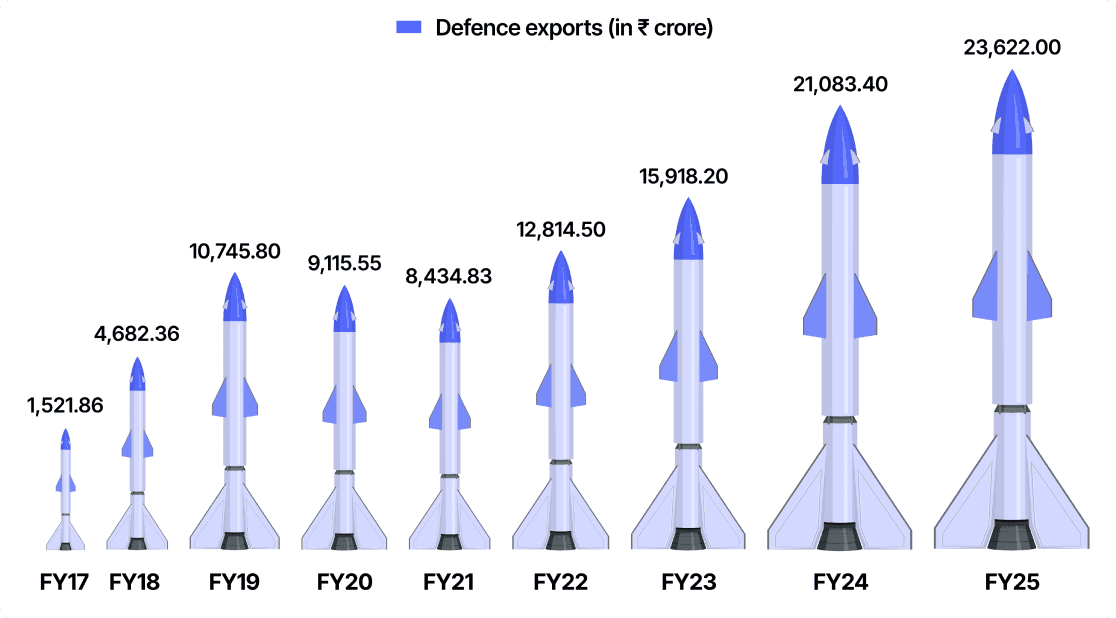
Source: The Hindu, April 1, 2025 | Fortune India, January 11, 2025
At the same time, domestic defence production has expanded, supported by government procurement policies, public-private collaboration, and targeted reforms.
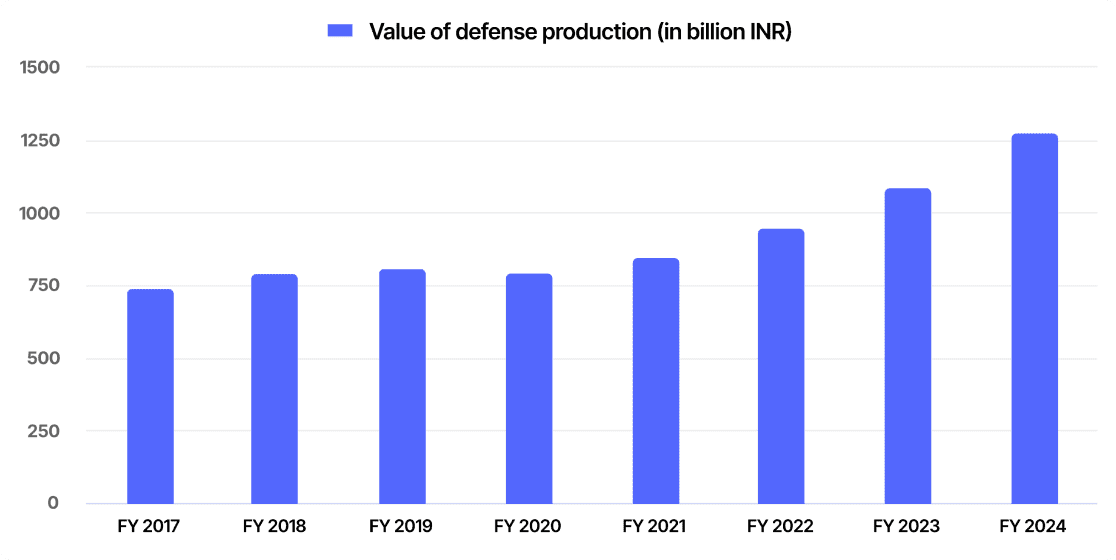
Source: Statista, Nov 26, 2024
Together, these trends suggest that India is moving from being a largely import-dependent buyer to a country with a more capable domestic defence industrial base.
Looking ahead
The transformation of India’s defence sector is still a work in progress. While certain structural and operational challenges persist, the direction is increasingly clear.
By 2028–29, India is aiming for ₹3 lakh crore in annual defence production and ₹50,000 crore in exports - targets that highlight the growing ambition to strengthen domestic capabilities and expand global reach.
With a continued policy focus and gradual ecosystem development, the sector holds potential not only as a strategic asset but also as a driver of industrial growth, innovation, and long-term national progress.