Shining a light on silver: potential for diversification, demand drivers, and potential relative undervaluation

When it comes to precious metals, gold often steals the spotlight.
However, silver, with its historically low correlation with equities, industrial utility, growing demand for new-age technologies, and valuation considerations, may play a dynamic role in investment portfolios.
Potential for diversification
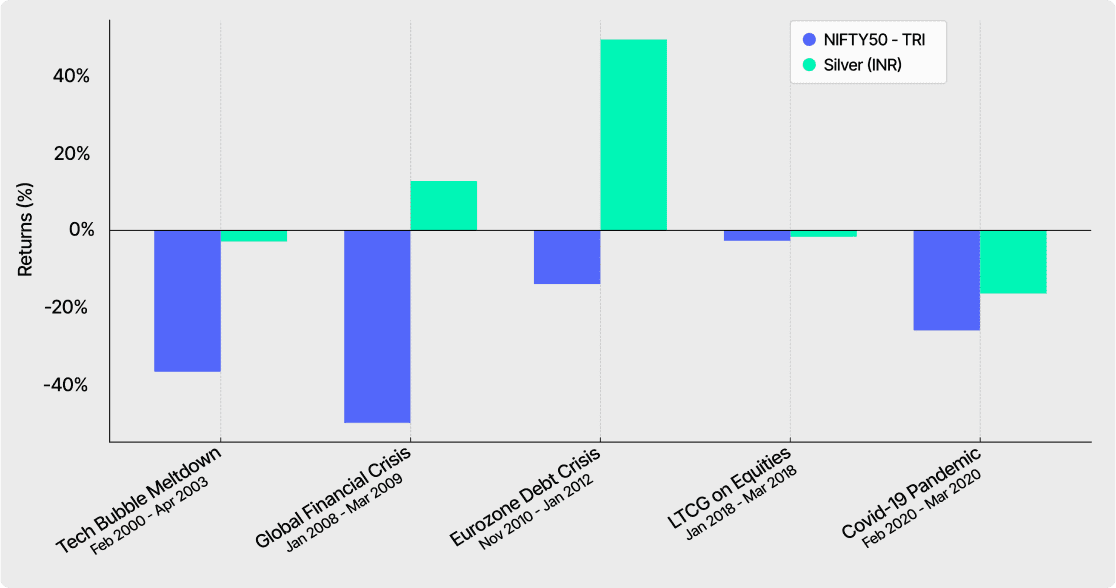
Silver has historically helped diversify portfolios, particularly the ones heavily weighted toward equities. Historically, it has shown a low correlation with equity markets, making it a potential hedge against market volatility.
Not only is silver largely uncorrelated with equities, but it has also often historically outperformed them during market downturns — helping portfolios against deeper drawdowns.
Supply-demand dynamics
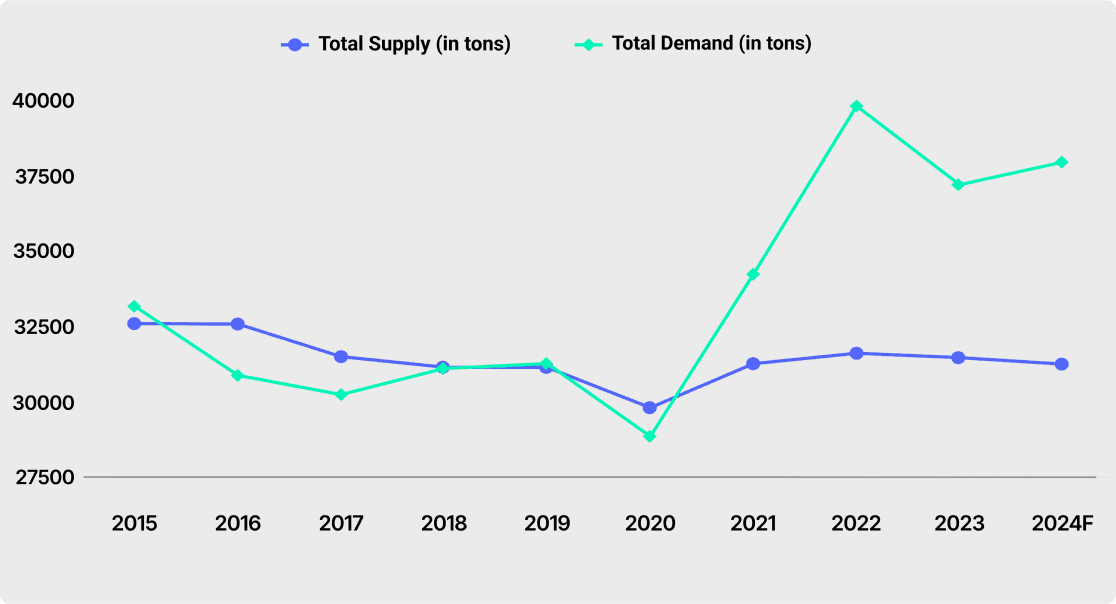
Over the past decade, silver’s supply has averaged approximately 31,000 tons annually, with ~80% sourced from mining and the remainder from recycling. Demand during the same period has varied, occasionally outpacing supply and at other times falling just below it.
However, from 2022 onwards, demand has consistently outpaced supply, reaching nearly 40,000 tons in 2022 compared to a supply of just about 31,500 tons. This consistent imbalance points to a potential structural deficit in the silver market.
Industrial demand and new-age technologies
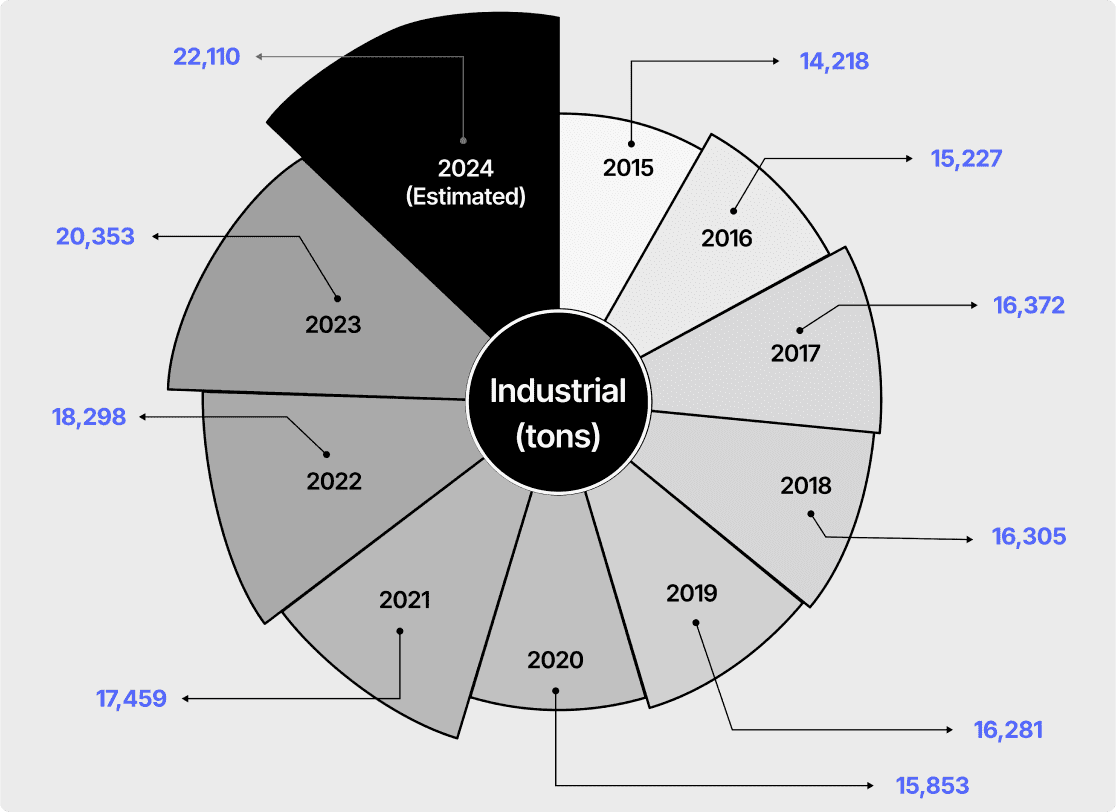
When most people think of silver, they picture jewelry, coins, or silverware. But in reality, the largest and fastest-growing demand for silver in the past decade has come from the industrial sector. In 2024, nearly 60% of all silver demand was estimated to be industrial, driven by both traditional and emerging technologies.
Over the past decade, while silver’s demand from jewelry has remained largely flat, its industrial demand has surged by more than 50%, fueled by sectors like electronics, solar energy, and electric vehicles.
Silver's superior electrical conductivity and reflectivity have made it indispensable to many industrial uses.
Nowhere is this growth more evident than in solar energy, where silver’s use in photovoltaic cells has almost quadrupled from around 1,850 tonnes in 2015 to more than 7,200 tonnes in 2024.
Similarly in the automobile space, while a typical ICE* vehicle uses about 15–28 grams of silver, a typical EV requires 25–50 grams per vehicle, due to higher electrical load and advanced circuitry.
As clean energy adoption and auto-electrification continue to grow, silver’s industrial demand may grow even further. And if supply doesn’t keep pace with this rising demand, that gap may potentially be reflected in higher prices.
Gold-silver ratio pointing to potential undervaluation
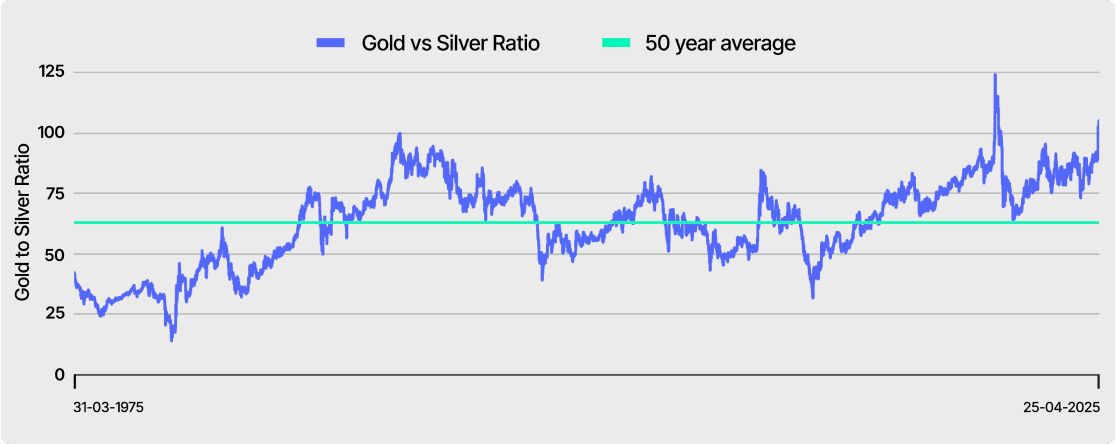
The gold-silver ratio is a frequently cited indicator when investors and analysts look at these two precious metals. The ratio tells you how many grams of silver it takes to buy one gram of gold.
As of April 25, 2025, the ratio stood at above 100, much higher than the historical average of around 60, and might imply undervaluation of silver relative to gold.
Should you consider silver?
Silver has been valued for thousands of years and continues to stand out as both a precious metal and industrial asset.
With its low correlation to equities historically and high demand from new-age technologies, it offers both potential for diversification and growth. Recent years have also seen demand outpace supply, adding to its potential for an increase in price, if the deficit persists. While silver may be a valuable portfolio addition, investors should consult their financial advisor before making any decisions.