
How India’s Service Sector is Powering the Economy


Historically, India has faced a merchandise trade deficit, which has been driven by its reliance on imports of oil, certain commodities, and machinery. To finance this deficit, the country secured U.S. Dollars through foreign investments, remittances, and other financial flows.
But in recent decades, the country has experienced a significant rise in its services exports, such as IT services, Business Process Outsourcing (BPO), and other professional services. What has this meant for the Indian economy?
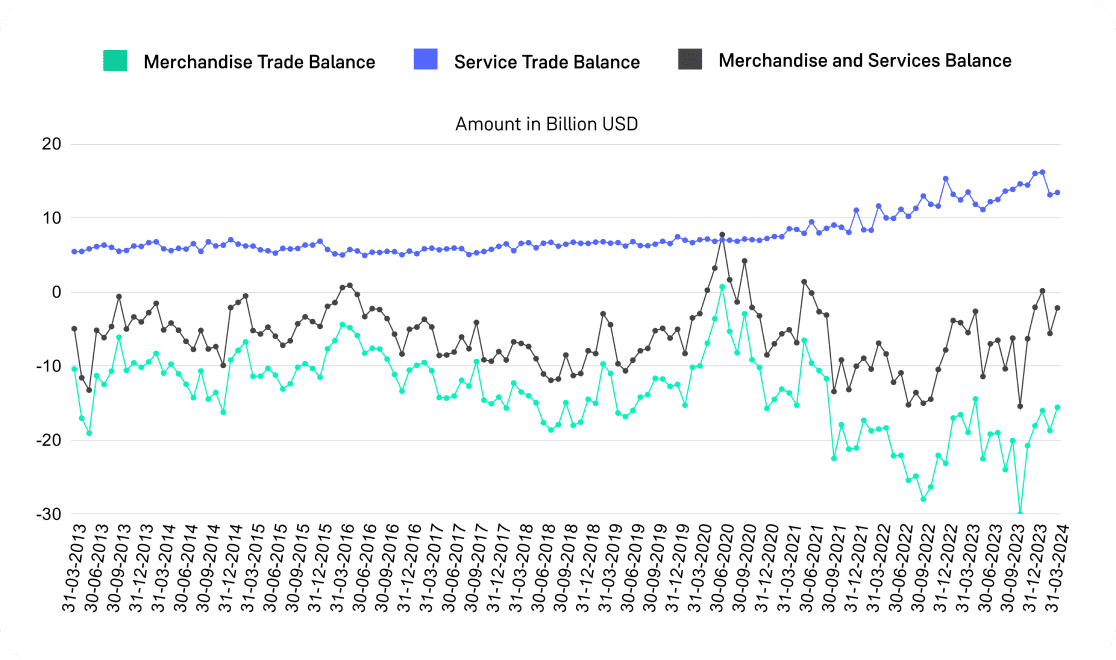
Today, the service sector lies at the heart of India’s economy, accounting for a lion’s share — almost 55 percent — of the GDP in FY24.
The surge in services exports has not only strengthened the overall Services Balance (SB) but also played a crucial role in reducing the Trade Balance (TB) and improving the Current Account Deficit (CAD).
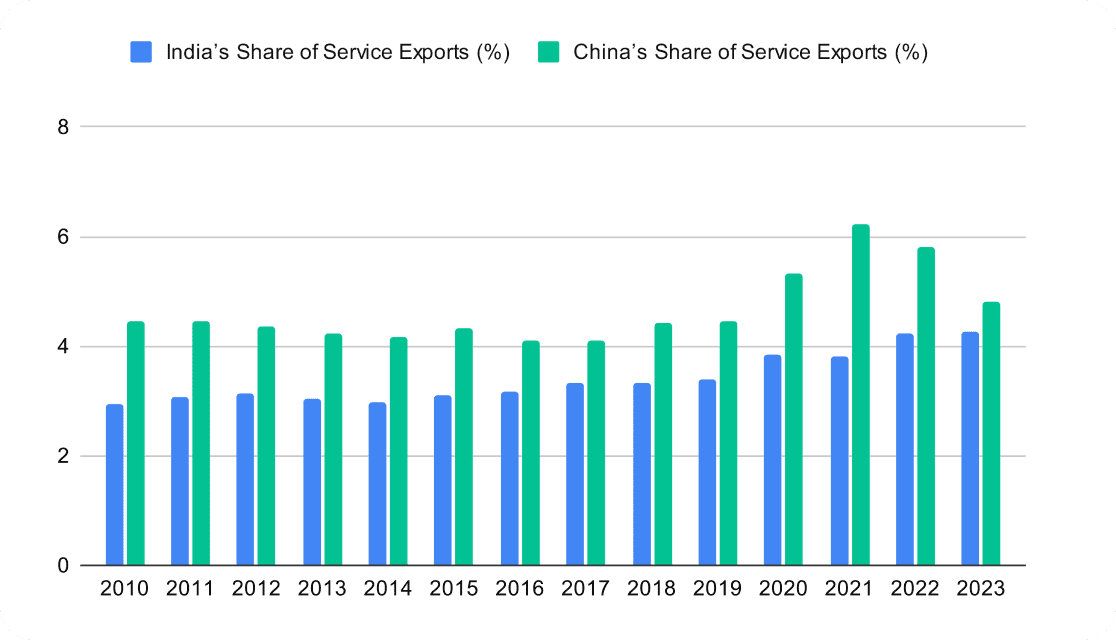
India's Growth Share in Global Services Exports
Although India has maintained a stable share of world merchandise exports despite global growth in merchandise trade between 2010 and 2022, it has increased its share of total world services exports.
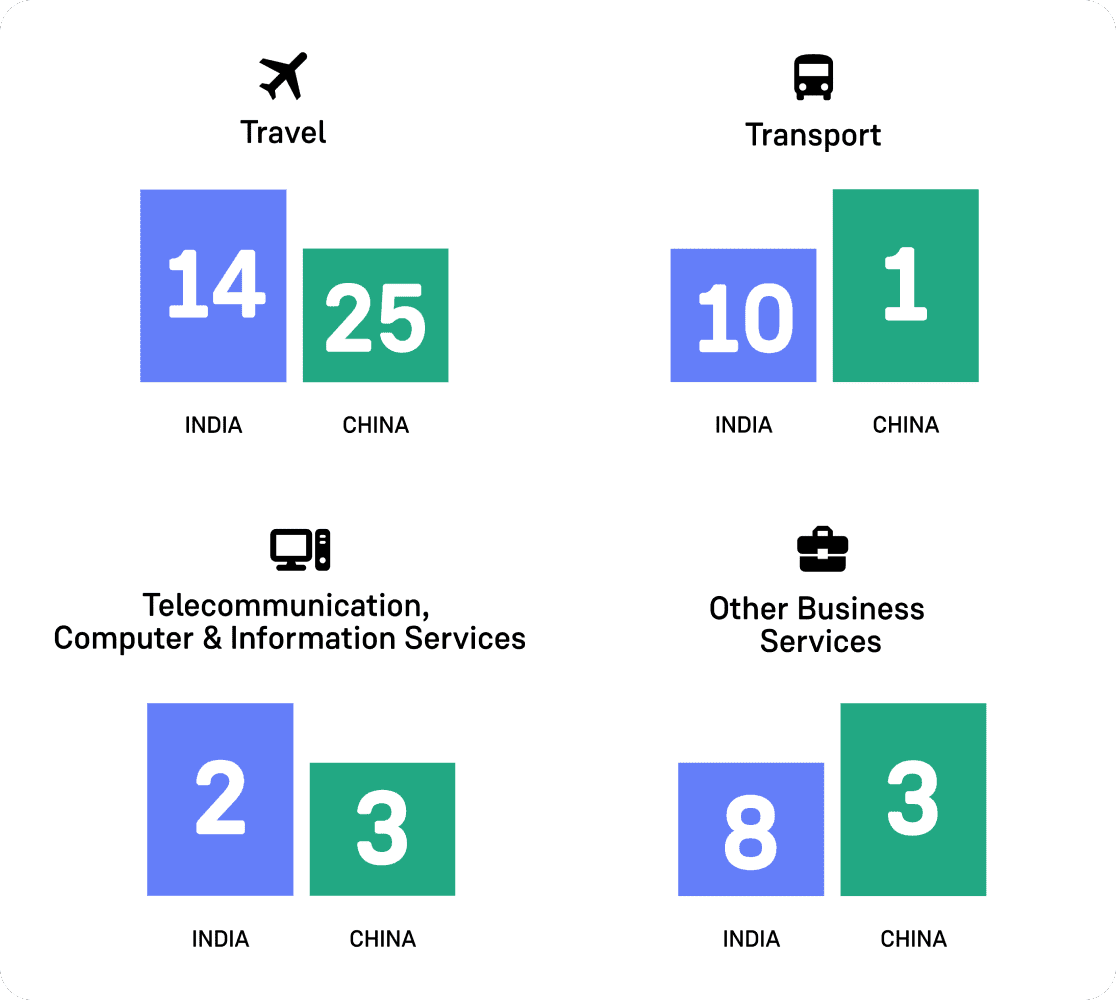
These services encompass a wide range of sectors, including Transport, Travel, and Other Commercial Services, which consist of technology/digitally delivered services (such as Telecommunication, Computer and Information Services), Financial Services, and Other Business Services.
Notably, India has maintained its lead over China in 'Other Commercial Services Exports, increasing its share from approximately 3.5% in 2010 to nearly 6% in 2023, marking a significant gain. This category is the biggest globally and in India.
Key Success Factors Driving India's Service Sector
1. Diverging Paths in the Late 90s: In the late 1990s, China concentrated on expanding its global manufacturing presence5, while India launched its IT industry in response to the Y2K.
2. India’s Manufacturing Hurdles: India struggled to match China’s manufacturing due to challenges in investment, efficiency, scale, and cost.
3. Indian IT Industry Success: The Indian IT sector flourished with government support and young, skilled talent.
4. Expansion into Services: The success of IT outsourcing spurred growth in related services, such as accounting and auditing.
Impact of India's Services Export Growth on the Economy
Infrastructure developments in transport, logistics, and IT, alongside technological advancements, have contributed to the growth of India's services exports.
As mentioned above, India’s rising services exports have played a crucial role in reducing the Current Account Deficit (CAD). This reduction has, in turn, reduced currency volatility, strengthened the country’s foreign exchange reserves, and stabilised interest rates, benefitting importers, exporters, and financial institutions.
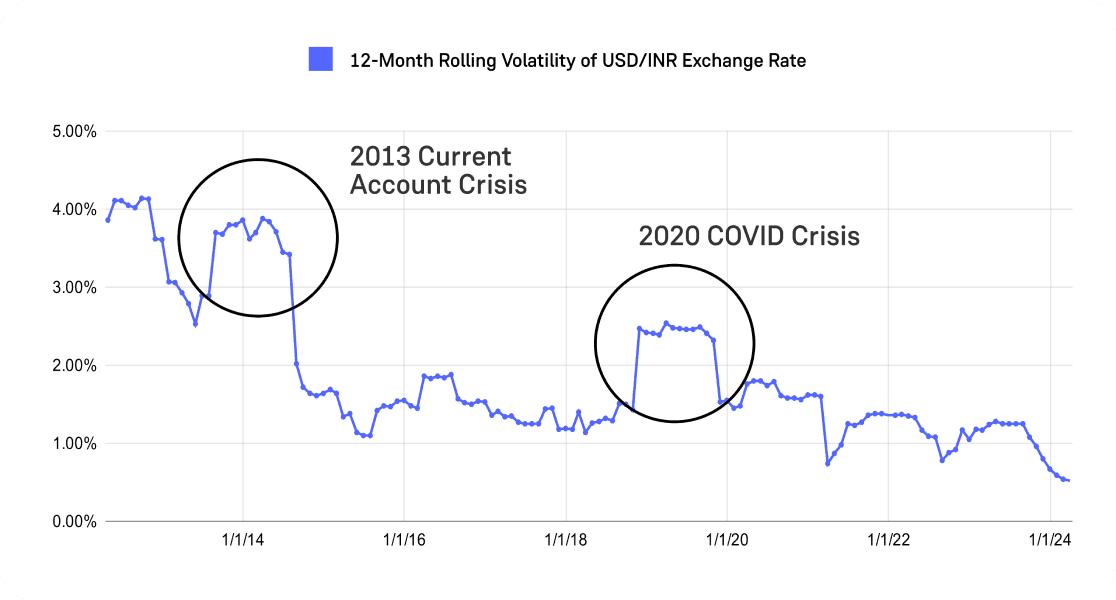
On a broader scale, the growth of service exports has been a key driver for economic expansion in India, fuelling job creation and contributing significantly to the nation’s overall economic stability.