
The Dynamics of Indian Consumption Patterns



In recent times, India's resilient domestic demand has driven growth despite modest global economic expansion and ongoing geopolitical crises. With private consumption expenditure being the one of the primary drivers of economic growth over the past three decades, it now accounts for ~60% of the country’s Gross Domestic Product (GDP).
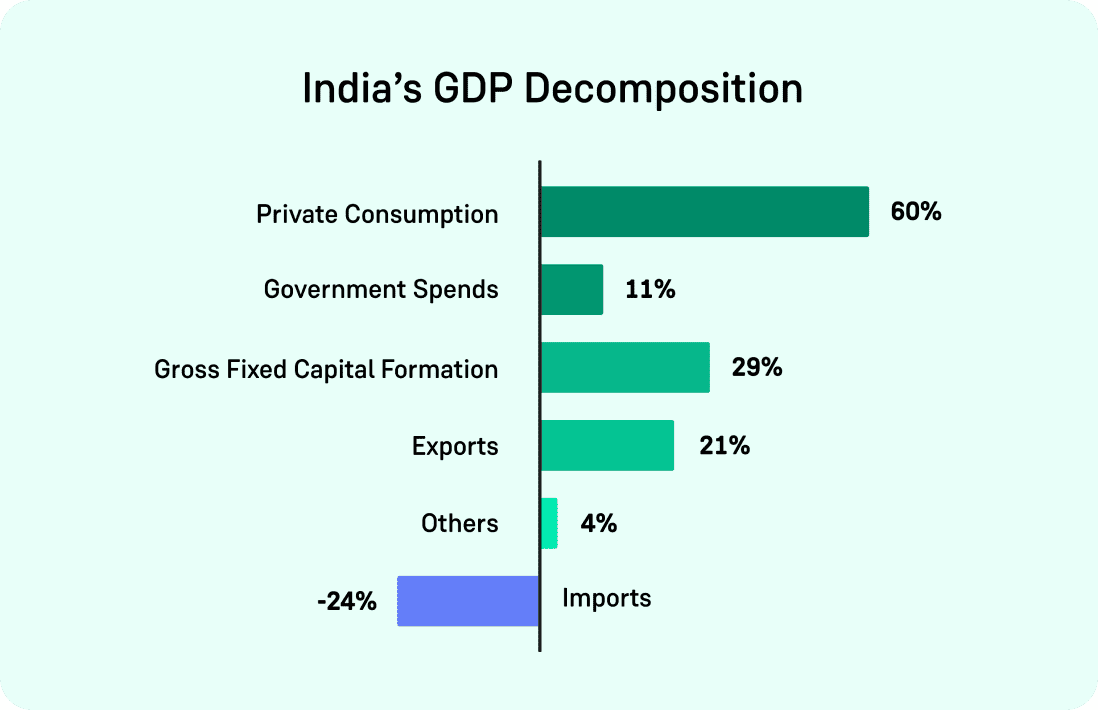
How does private consumption fuel India's GDP growth?
Strong Domestic Demand: The Indian economy has shown resilience due to robust domestic demand, highlighted by a 3.5% year-over-year increase in private consumption since Q3 FY2024. This growth is fueled by increased production in consumer durables and rising sales of passenger vehicles and two-wheelers.
Revival of the Service Sector: The increase in private consumption is also supported by a rebound in services such as trade, hospitality, and transportation.
Government Support & Infrastructure Investments: Government initiatives to improve infrastructure, logistics, and the overall business environment have significantly contributed to maintaining strong private consumption.
Urbanisation & Demographic Dividend: India has a median age of about 28 years, among the world's youngest, promoting a consumption-driven economy, with youth more inclined towards spending on goods and services.
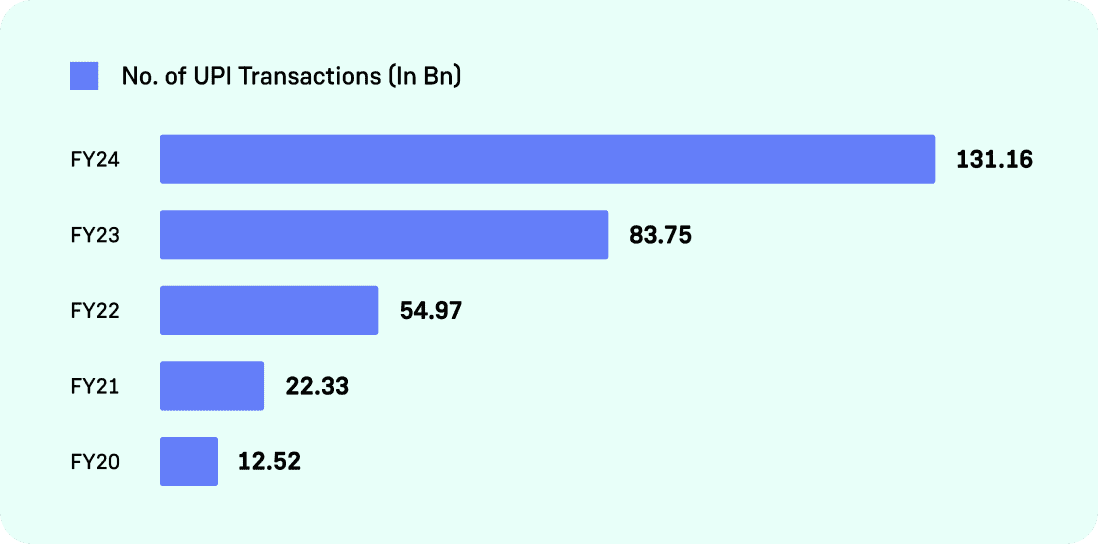
Digital Transformation: More digital transactions, particularly through platforms like UPI, have facilitated easier and faster consumer spending. This shift towards a digital economy has increased consumption levels.
What are Indians consuming the most?
Media & Entertainment
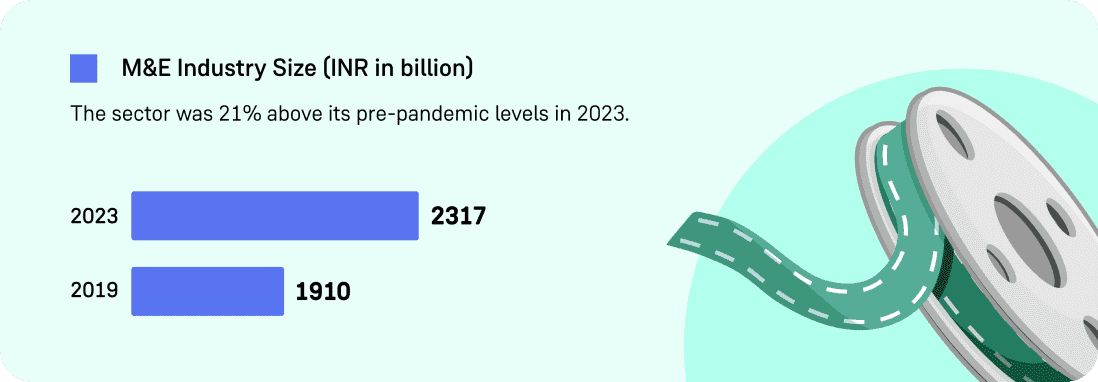
India’s Media & Entertainment industry, which traditionally outperforms India’s GDP growth rate, grew by 8% to reach ₹2.3 trillion in 2023.
New media emerged as the primary driver of growth, contributing ₹122 billion to the total increase of ₹173 billion.
Fast Moving Consumer Goods
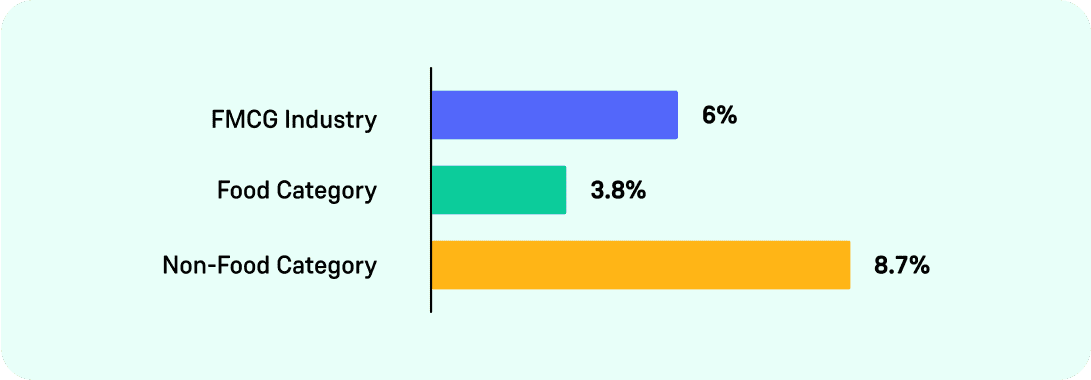
In 2023, the urban-rural consumption gap narrowed, with rural areas growing at 5.8% compared to 6.8% in urban areas.
Notably, the non-food category (such as toiletries, over-the-counter drugs, and cleaning products) outpaced food in value growth.
E-Commerce
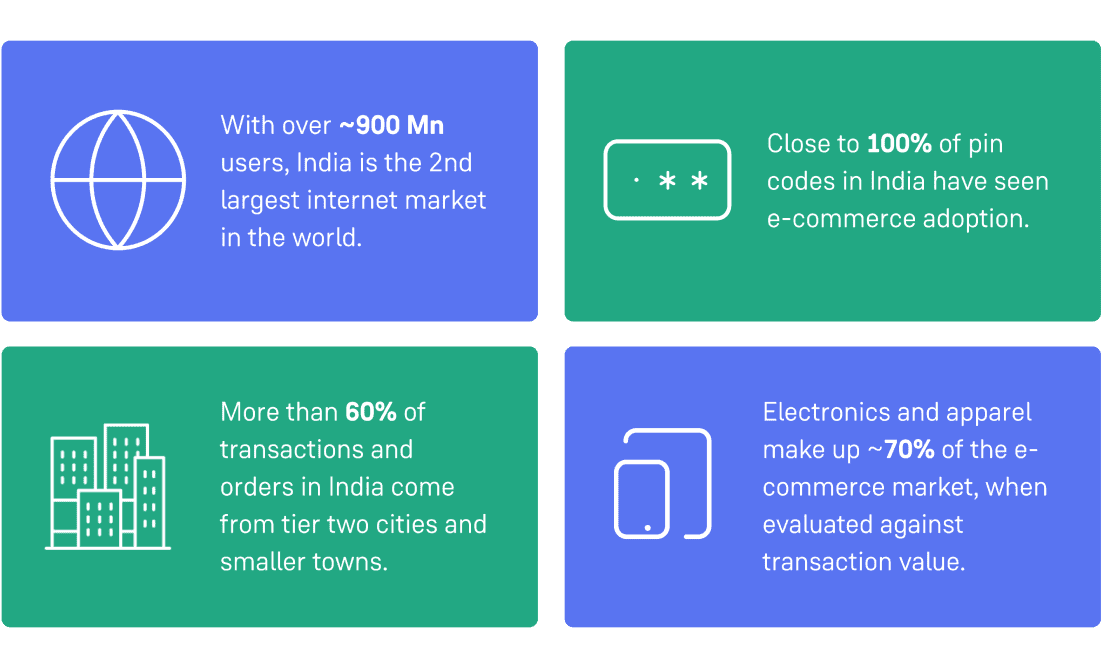
India’s e-commerce sector is booming and driven by extensive internet penetration. As the world’s second-largest internet market, the country has seen remarkable growth in online shopping and digital transactions.
Travel
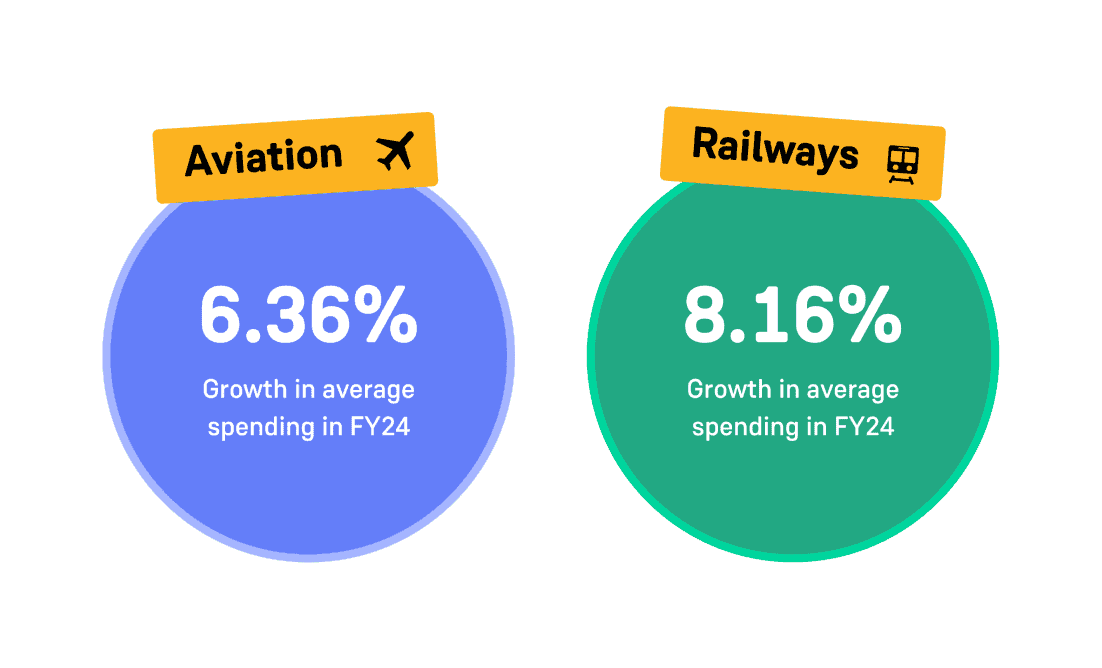
A growing millennial population and rising per capita income drive India's travel economy, with people favoring experiences such as travel, leisure, and fine dining. Between FY18 and FY23, goods grew at 8-9% CAGR, and services at 11-13%.
Finance
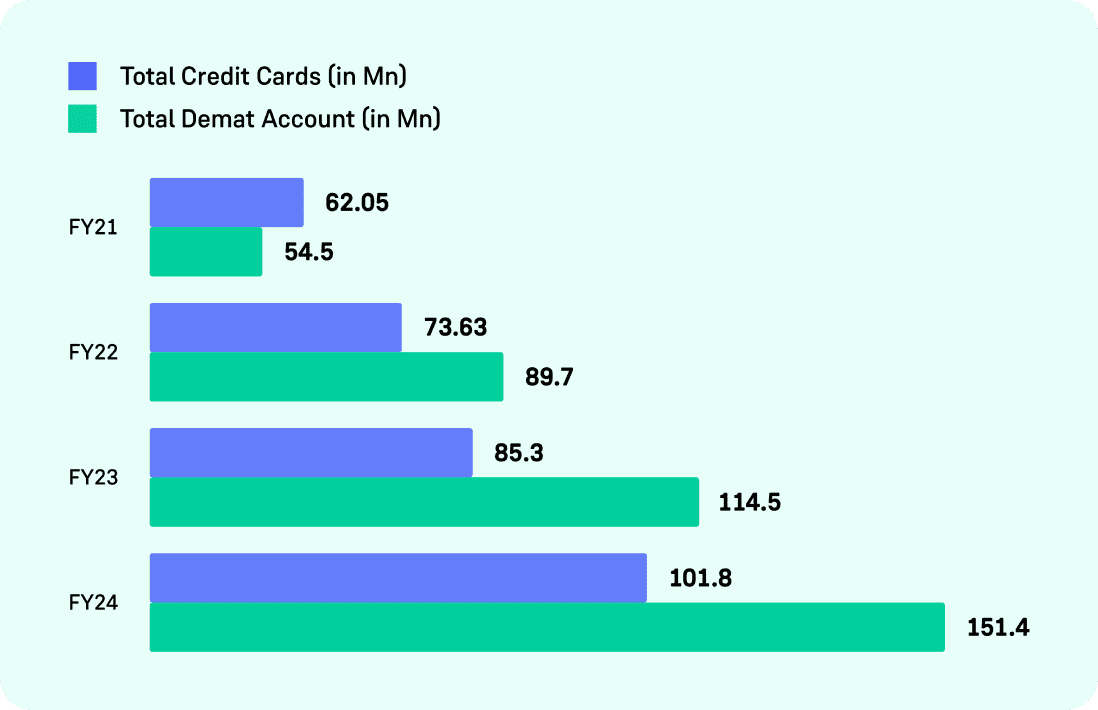
The finance sector in India has witnessed significant changes in consumption patterns over the years due to:
- Digital transformation: Due to a holistic ecosystem built around digital payment platforms, mobile banking, and fund transfer.
- Increased financial inclusion: Due to various govt initiatives like Pradhan Mantri Jan Dhan Yojna and direct cash transfers to vulnerable sections of the society.
- Rise in household debt: The household liabilities have risen from 3.6% to 5.8% of the total GDP.
Telecom
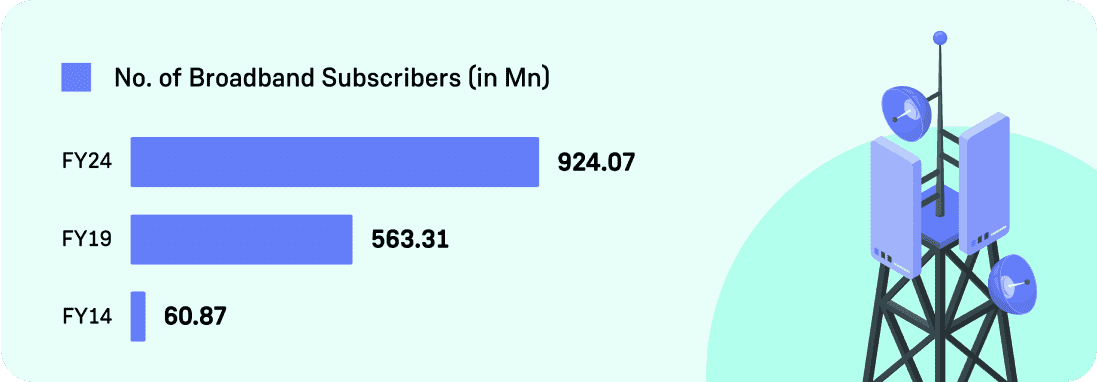
As of April 2024, India’s telecom industry is the second largest in the world, boasting a subscriber base of 1.091 billion, covering both wireless and wireline subscribers. This rapid growth is driven by affordable tariffs, mobile number portability, and an expanding 3G, 4G, and 5G coverage.
Found this helpful? Let us know which topics you'd like to explore!