
How Indian Railways is driving economic growth across the nation?



Indian Railways, the backbone of India’s economy, serves as a critical transport network, connecting millions of people and driving economic growth.
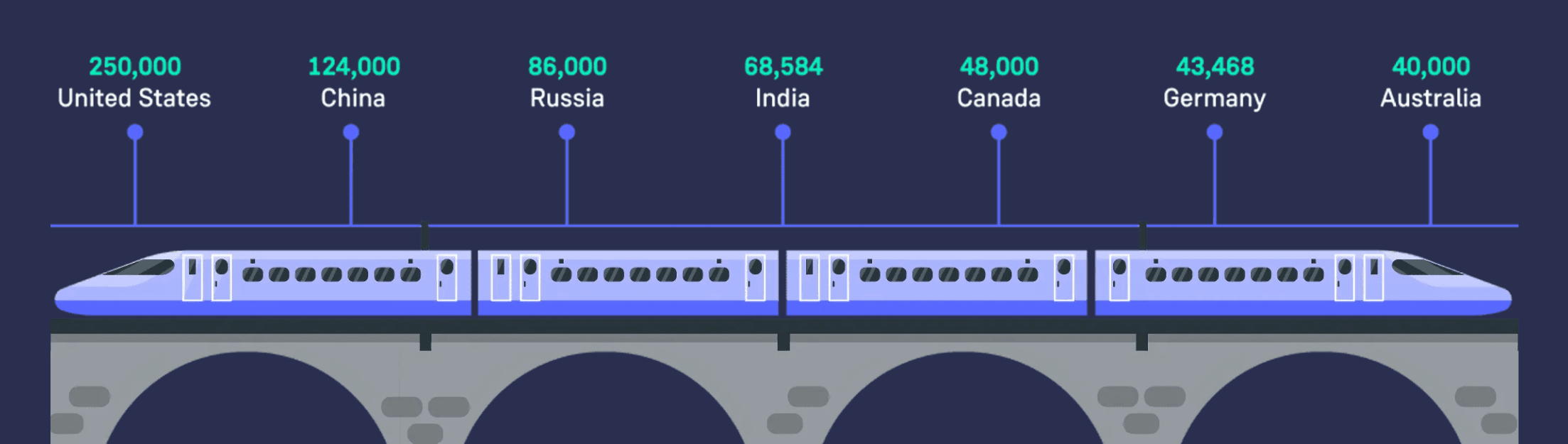
As the world’s fourth-largest railway network, spanning 68,584 Kms of the railway network, it plays a significant role in shaping India’s development.
World’s largest railway networks (in Kms)
Economic impact of Indian Railways
Indian Railways demonstrated robust growth in FY24, generating a total revenue of ₹2.56 lakh crore.
Building on this momentum, the sector has been allocated a budget of ₹2.52 lakh crore for FY24-25, aiming to contribute around 1.5% to India’s GDP through enhanced infrastructure and improved connectivity.
Beyond its economic contributions, it plays a crucial role in generating employment, with over 1.2 million employees across 17 zones and 68 divisions, making it the 10th largest employer globally.
Recent initiatives modernizing Indian Railways
Between 2014 and 2024, Indian railways achieved several milestones, expanding its network by 31,180 km. This included an average daily addition of 8.54 km through new lines, along with gauge conversions, and track doubling.
Here are some key initiatives transforming Indian railways:
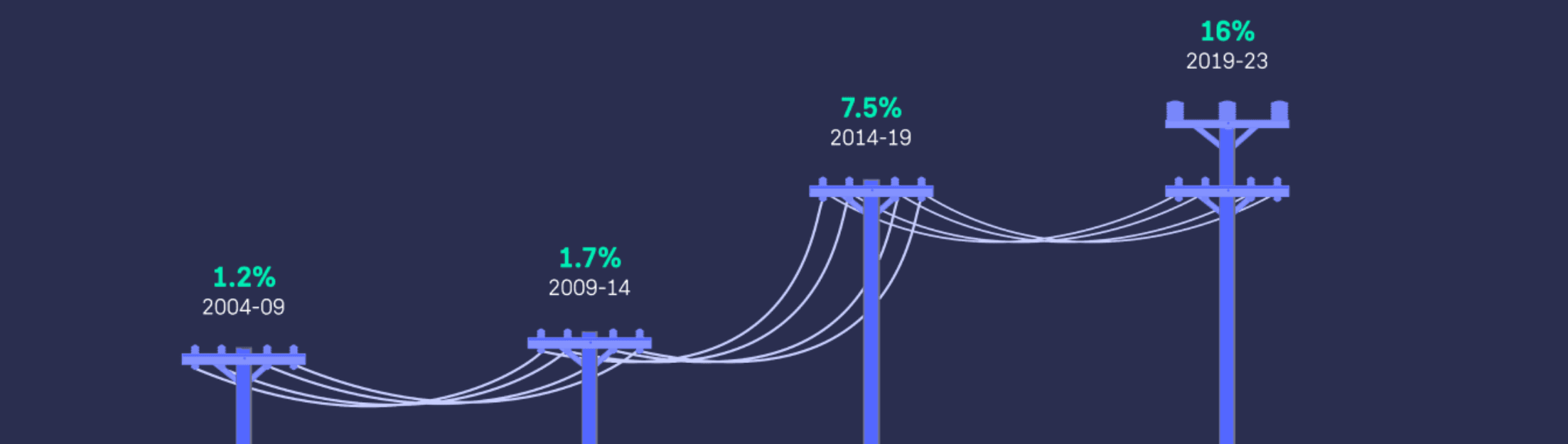
1. Electrification of railways: Since 2014, around 40,000 km of railway lines have been electrified, nearly doubling the 21,801 km achieved in all prior years. As of November 2024, 97% of the broad gauge railway network is electrified.
Rail electrification in India is happening 9 times faster than a decade ago!
2. Introduction of high-speed trains: High-speed trains like Tejas and Vande Bharat, with IoT-enabled smart coaches, offer faster travel, modern interiors, and superior onboard services ensuring safety and convenience for passengers.
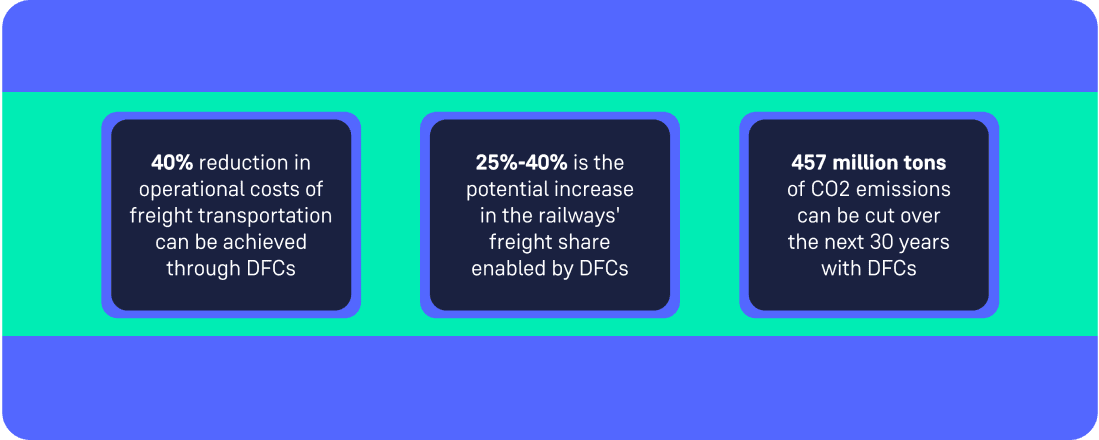
3. Dedicated Freight Corridors (DFCs): DFCs are exclusive high-capacity rail lines for freight transport, designed to decongest passenger routes by 70%.
It is projected that DFCs will contribute ₹16,000 crore to the country’s GDP by improving supply chain efficiency and reducing logistics costs.
4. Amrit Bharat Scheme: The scheme targets the modernisation of over 1,000 railway stations across India with Wi-Fi, escalators, and improved accessibility for differently-abled passengers.
5. Solar-powered stations: Indian Railways has installed over 200 megawatts of solar power capacity at 1498 railway stations including Varanasi, New Delhi, Jaipur, and Howrah.
Through these transformative initiatives, Indian Railways is undergoing a remarkable journey, making railways a preferred mode for both passenger and freight movement.