The Impact of Inflation and Interest Rates on Fixed Income Returns


While many are familiar with equities, fewer understand another crucial category: fixed income instruments.
These include treasury bills, corporate bonds, commercial papers, government securities, and various money market instruments.
They aim to offer predictable income, and each comes with a set maturity date and a fixed interest rate, or yield, which investors receive at maturity, hence the term ‘fixed-income securities.’
So, what does investing in fixed income instruments mean in today’s economic climate?
Debt funds are mutual funds that primarily invest in such fixed income instruments.
Since these instruments aim to provide returns that are insulated from market fluctuations, they are considered potentially low-risk investment options, making debt funds a possible option for those seeking less volatility in their portfolios.
Choosing the right duration for fixed income investments
When selecting fixed income investments, choosing the right duration is crucial to accommodate financial goals and risk tolerance.
For example, Liquid Funds are suitable for short-term goals such as creating an emergency fund or saving for a vacation.
If you're looking to buy a car or fund home renovations, Short Duration Funds with maturities of 1 to 3 years may be a better option.
Here are some debt funds based on their maturity period:
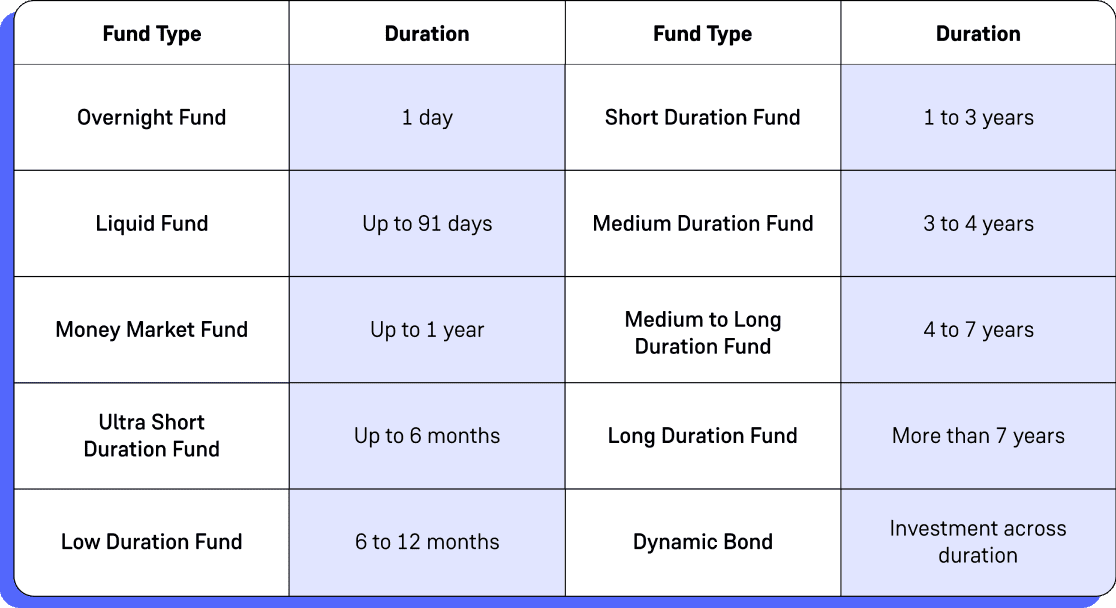
Each duration serves different investment goals, so it's important to match a choice to specific needs.
Understanding the Impact of Economic Factors on Fixed Income Investments
1. Inflation
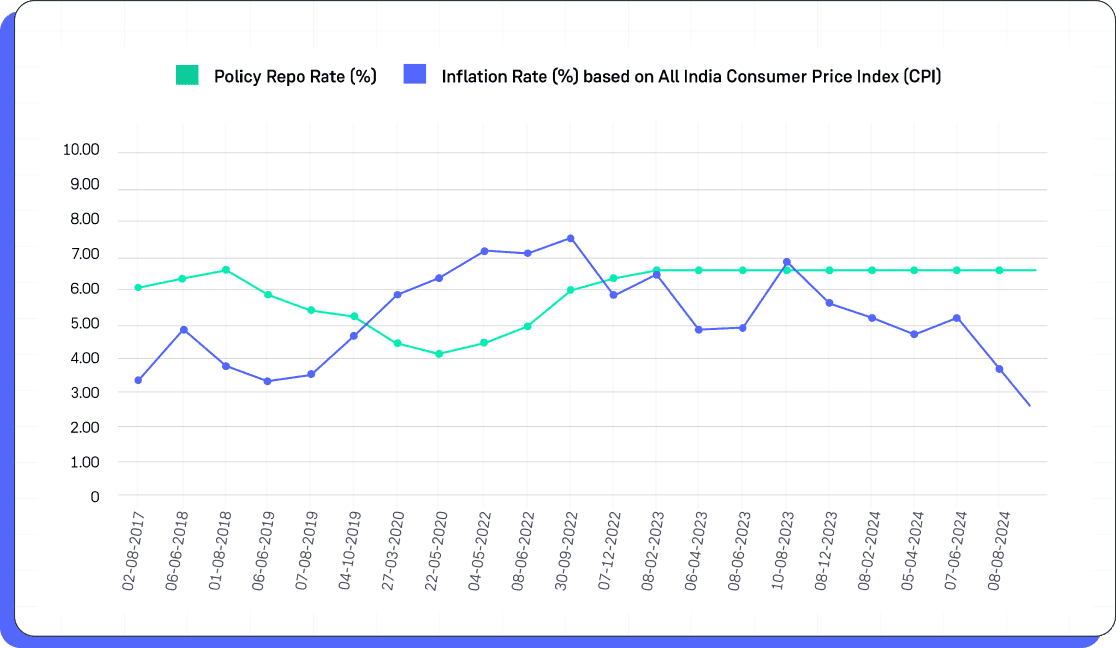
Reduction in real returns: When inflation is high, the purchasing power of money decreases.
For debt funds, which generally aim to offer fixed returns, higher inflation can decrease the real returns (i.e., inflation-adjusted returns) if the nominal returns fall below the inflation rate, diminishing the investment's value.
Impact on interest rates: Central banks, such as the Reserve Bank of India (RBI), often raise interest rates to combat high inflation.
Higher interest rates make borrowing more expensive, which aims to cool down an overheated economy, by reducing spending and investment. However, this increase in rates can negatively impact the performance of debt funds.
2. Interest Rates
Inverse relationship with bond prices: Debt funds invest in bonds and other fixed-income securities. Now, there is an inverse relationship between bond prices and interest rates:
- When interest rates rise, the price of existing bonds declines because new bonds are issued with higher yields, making the older bonds less appealing.
- Conversely, when interest rates fall, the prices of exciting bonds increase since they offer better returns compared to newly issued bonds.
These price fluctuations directly affect the Net Asset Value (NAV) of debt funds.
Interest rate risk: Debt funds with longer returns (such as long-duration and gilt funds) are more sensitive to interest rate changes.
When rates rise, these funds typically experience large declines in NAV compared to short-duration funds. Conversely, they have the chance to benefit more when interest rates fall.
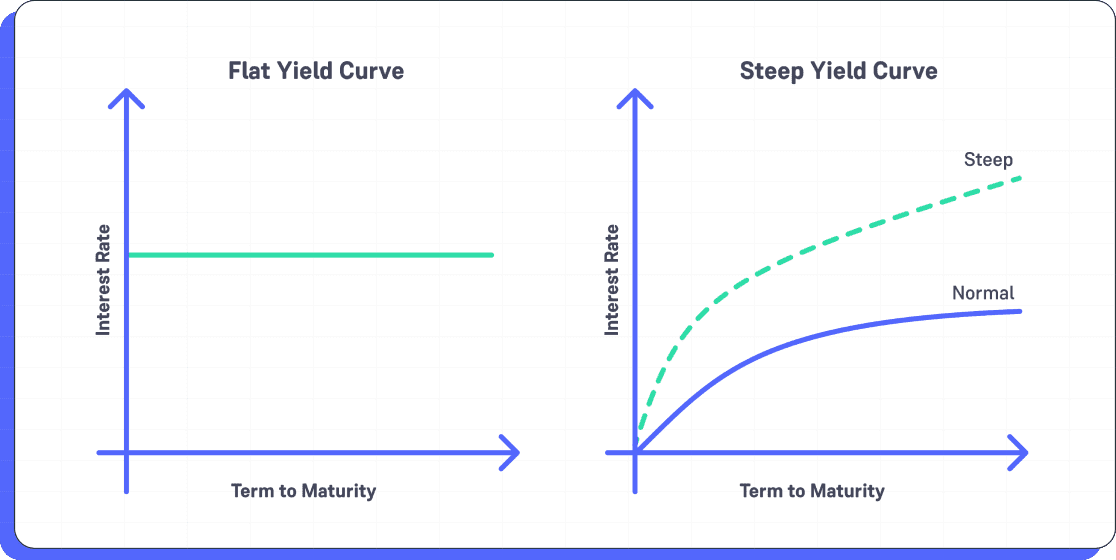
Yield curve impact: The yield curve shows the relationship between interest rates (or yield) and debt maturities.
When the curve steepens (long-term rates rise more than short-term), long-duration funds may potentially see higher volatility.
When it flattens (the gap between long-term and short-term rates narrows), short-duration funds may potentially perform better.
In conclusion, the broader economic environment, including inflationary pressure and central bank actions, plays a critical role in determining the dynamics of debt funds.
Found this helpful? Let us know which topics you'd like to explore!